Your complete guide to safe, confident microwave cooking — backed by facts, not kitchen folklore
Intro
If you’ve ever wrapped your food in foil “just to be safe,” panicked at the sight of a metal spoon near your microwave, or worried that your reheated dinner is somehow “radioactive” — you’re not alone. The microwave might be the most-used and most-misunderstood appliance in Indian kitchens today.
Despite being a staple in millions of homes — from hostel rooms to busy working professionals’ kitchens — the microwave still carries decades of myths that refuse to die. Today, we’re busting the three biggest microwave myths with simple science, so you can cook (and reheat) with full confidence.
This is part of our ongoing Appliance Authority Series on CookWithSusmita, where we break down exactly how your kitchen appliances work — no jargon, no fear-mongering, just facts that make your cooking life easier.
Why You’ll Love This
- Clears up confusion you’ve probably carried for years
- Makes you genuinely more confident using your microwave every single day
- Saves you money and effort (no more unnecessary foil, no more avoiding the microwave out of fear)
- Backed by simple, practical science — explained the easy way, with zero boring lectures
- Helps you choose the right microwave if you’re upgrading (recommendation below!)
What You’ll Need
- A microwave (solo, grill, or convection — doesn’t matter, the science applies to all)
- Microwave-safe containers (glass or BPA-free plastic)
- An open mind to unlearn some long-held kitchen “rules”
Recommended pick: If you’re looking to upgrade your microwave, this convection microwave is one of the most reliable options for Indian kitchens — great for reheating, baking, and air-frying-style cooking all in one device. (Affiliate link)
Myth 1: Microwaves Destroy All the Nutrients in Your Food
Busted.
This is probably the most common myth — and it’s almost the opposite of the truth.
Here’s the actual science: nutrient loss in cooking happens mainly because of two things — heat exposure time and water content. Water-soluble vitamins like Vitamin C and B-complex vitamins are extremely sensitive to both. The longer your food sits in heat, and the more water it’s cooked in (like boiling), the more these nutrients leach out and get lost.
Microwaving, by design, cooks food faster and typically uses less water than boiling or even pan-frying. That combination — short cook time, minimal water — means more nutrients stay locked inside your food rather than draining away into the cooking water.
Studies on vegetables like spinach, broccoli, and carrots have repeatedly shown that microwaving retains more Vitamin C than boiling does, simply because there’s less time for degradation and no water to leach into.
Bottom line: A quick microwave steam-cook is often more nutrient-preserving than a long boil. The myth survives because microwaving “feels” less natural than stovetop cooking — but the chemistry says otherwise.
Myth 2: You Can Never Put Any Metal in the Microwave
Partially busted.
This one isn’t entirely wrong, but it’s missing important nuance — and that nuance matters if you want to use your appliance to its full potential.
Microwaves work by emitting electromagnetic waves that excite water molecules in food, generating heat. Metal reflects these waves instead of absorbing them. Thin metal — foil edges, twist ties, metallic paint on plates — can cause arcing (those scary sparks) because the waves induce a concentrated electric current that has nowhere to safely go, especially at sharp edges or thin points.
But here’s what most people don’t know: not all metal behaves the same way.
- Smooth, thick metal racks (the kind included with convection or grill microwaves) are specifically engineered to handle microwave energy safely
- Some microwave-safe metal skewers or trays are designed with rounded edges precisely to avoid arcing
- The danger isn’t “metal” as a category — it’s thin, sharp-edged, or crumpled metal
The real rule: It’s not “no metal, ever.” It’s “no random metal you haven’t confirmed is microwave-safe.” Always check your microwave’s manual — solo, grill, and convection models all have different tolerances.
Myth 3: Microwaved Food Is “Radioactive” or Unsafe to Eat
Completely busted — and this is the myth that needs to die fastest.
Microwaves use non-ionizing radiation — the same broad category of electromagnetic energy as your phone, Wi-Fi router, or FM radio. Non-ionizing radiation has enough energy to make water molecules vibrate (which creates heat) but not enough energy to alter the molecular or atomic structure of your food.
This is fundamentally different from ionizing radiation (like X-rays or nuclear radiation), which can alter molecular structures and is genuinely dangerous in high doses.
Once your microwave stops running, the radiation stops immediately — there is zero residual radiation left in your food. Your dal, your rice, your reheated curry — none of it is “radioactive” in any sense of the word. This myth likely stuck around simply because the word “radiation” sounds scary, even when the science behind it is completely harmless.
Tips for Smarter Microwave Use
- Always check your microwave’s manual for what your specific model considers safe — combi and convection microwaves have different rules than solo ones
- Use proper microwave-safe glass or BPA-free plastic containers — never assume “any” container works
- Stir food halfway through reheating for even heat distribution — this matters far more than worrying about foil
- Cover food loosely (not with metal foil) to retain moisture without trapping excess steam
- If you’re upgrading your appliance, look for one with auto-reheat sensors — it takes the guesswork out completely. Check this model out here
Why This Matters for Your Kitchen
Busting these myths isn’t just about trivia — it’s about using your microwave with full confidence instead of fear. Once you understand why something is safe or unsafe, you stop second-guessing every reheat and start actually using your appliance the way it was designed to be used: as a fast, nutrient-friendly, genuinely useful kitchen tool.
Related Posts
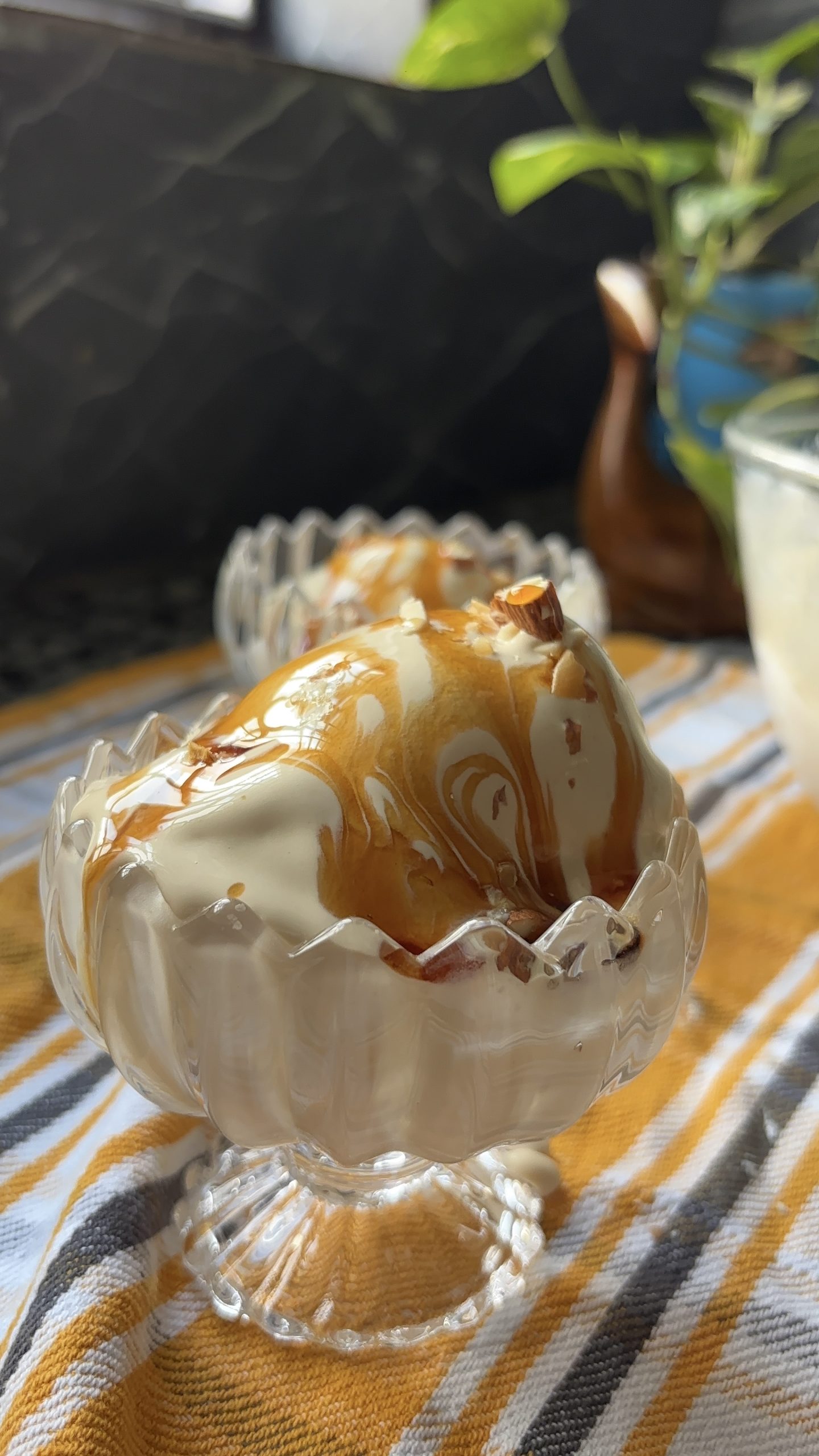
Nolen Gur Ice Cream Recipe | Creamy Bengali Winter Dessert (No Machine)
A bowl full of winter memories There are certain flavours that instantly take you back home. For me, Nolen Gur is one of them. The moment winter arrives in Bengal,…
Homemade Mozzarella Cheese Poppers (Crispy & Cheesy Snack Recipe)
Made with homemade mozzarella-style cheese using just milk, vinegar, and salt! ✅ Meta Title (SEO Title) Homemade Mozzarella Cheese Poppers | Easy Crispy Snack Recipe | No Rennet Cheese 📝…

Chingri Bhapa – Steamed Prawns with Malabar Spinach (Pui Shaak)
Steamed Prawns with Malabar Spinach Chingri Bhapa – Steamed Prawns with Malabar Spinach (Pui Shaak) This traditional Bengali Chingri Bhapa recipe is a beautiful example of how simple ingredients can…